Archive | June, 2026

THE MANY SHADES OF MURDOCH

26 Jun

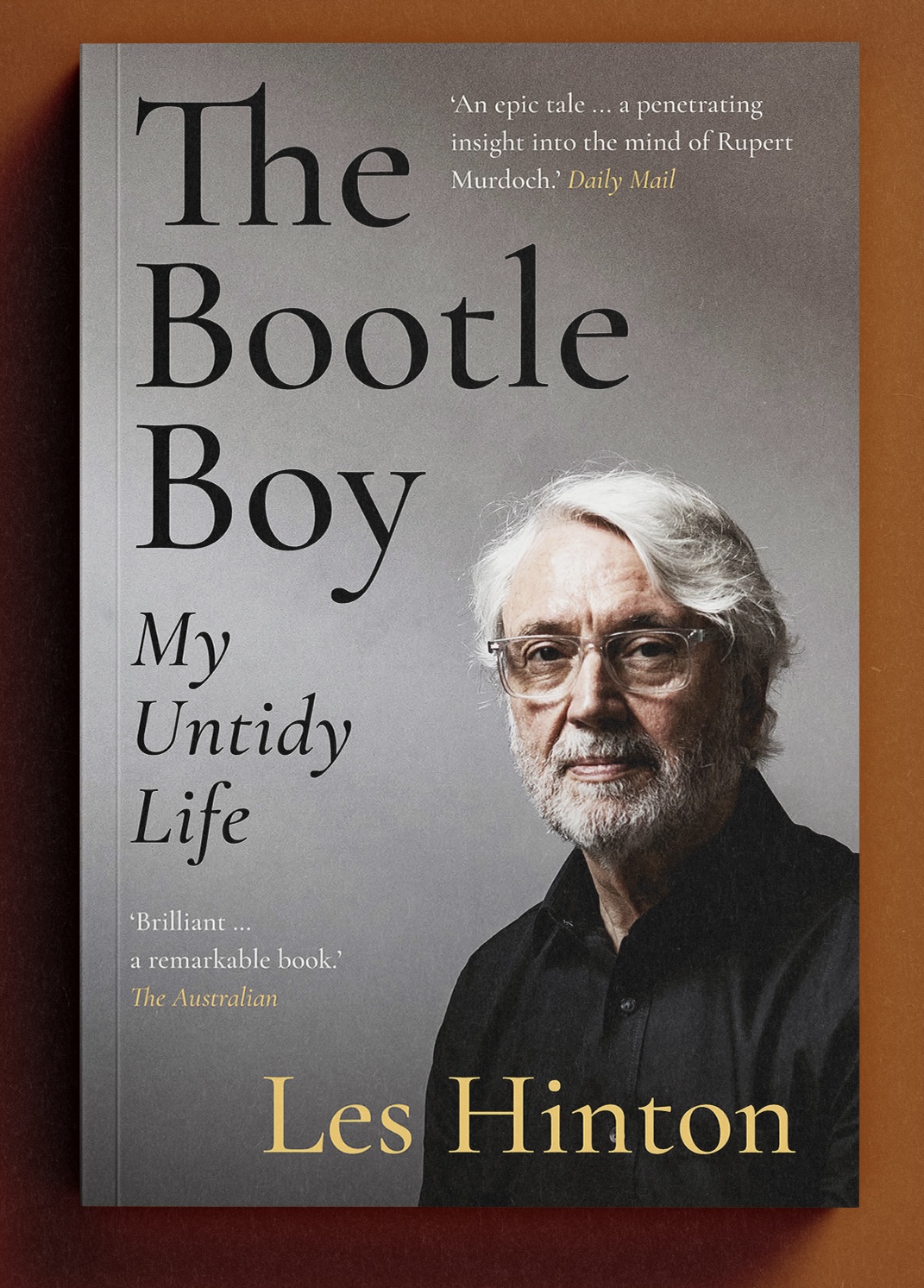
I wrote a memoir called The Bootle Boy. It tells the story of my life, and Rupert Murdoch is one of its central characters.

Murdoch has attracted admirers and fierce critics in equal measure. I worked with him for fifty years, so I had to find a way to tell my story honestly—without being accused either of biting the hand that fed me or of seeming like a brainwashed Murdoch cultist.

The result is my own account: personal, candid and, I hope, fair. Whether you admire Rupert Murdoch, dislike him, or simply want to understand the man behind the headlines, you may find something that surprises you.

As I write in my book:“He could be hands-off or autocratic, charming or irascible, forgiving or fierce, and sometimes just a comprehensive pain.

Below are excerpts from The Bootle Boy. And you can buy a copy here https://mybook.to/TheBootleBoy
Now and then, he would seem vulnerable. We were about to close the $3 billion acquisition of the Triangle publishing group, which included TV Guide, with a weekly circulation of almost 17 million. It was the biggest publishing deal in US history and a high-stress moment.

We were waiting in a motel near Triangle’s HQ in Radnor, Pennsylvania. Lawyers and finance people were working the phones in an ill-lit conference room, organising the wiring of cash to the seller’s banks. Rupert was standing in the lobby with me and a couple of others, talking about what we would do when we walked into Triangle’s huge offices to take over the business. Here was the tough and invincible mogul on the brink of another mega deal. But then I saw a red smear on his fingers, staining the white handkerchief he had taken from the breast pocket of his jacket. He had picked at the cuticles of his fingernails until they were bleeding.

He could be in pain when things went wrong. During a company crisis, he had to sell a stable of magazines.

He organised a dinner for the departing executives, about 50 of them, and we sat in his office early that evening discussing what he would say to them. He wanted to be sure to have a grateful remark for every individual in the room. He put down his pen at last and looked silently across his office, in the direction of a wall of television screens.

‘I feel like I’ve let them all down,’ he said.

But he could also be tough and terrifying towards the people working for him.


I became good at providing therapy to executives and editors who suddenly felt out in the cold. Sophisticated people would come to me, wounded because ‘Rupert hasn’t called me for more than a month.’
My response was always the same: ‘Lucky you.’
He was like a visiting comet and the mysterious astronomy of Rupert made it impossible to know when he would appear and how long he would stay.
In meetings, he went easy on junior people; he must have seen how terrified some were. But, with senior people who displeased him, he could be savage. I consoled over drinks more than one tearful editor. He would often ask, when one more beaten executive walked limply from his office: ’Did go too far?’ Usually the answer was yes.”

Copyright © Les Hinton 2026
MEMORIES OF BOOTLE

8 Jun

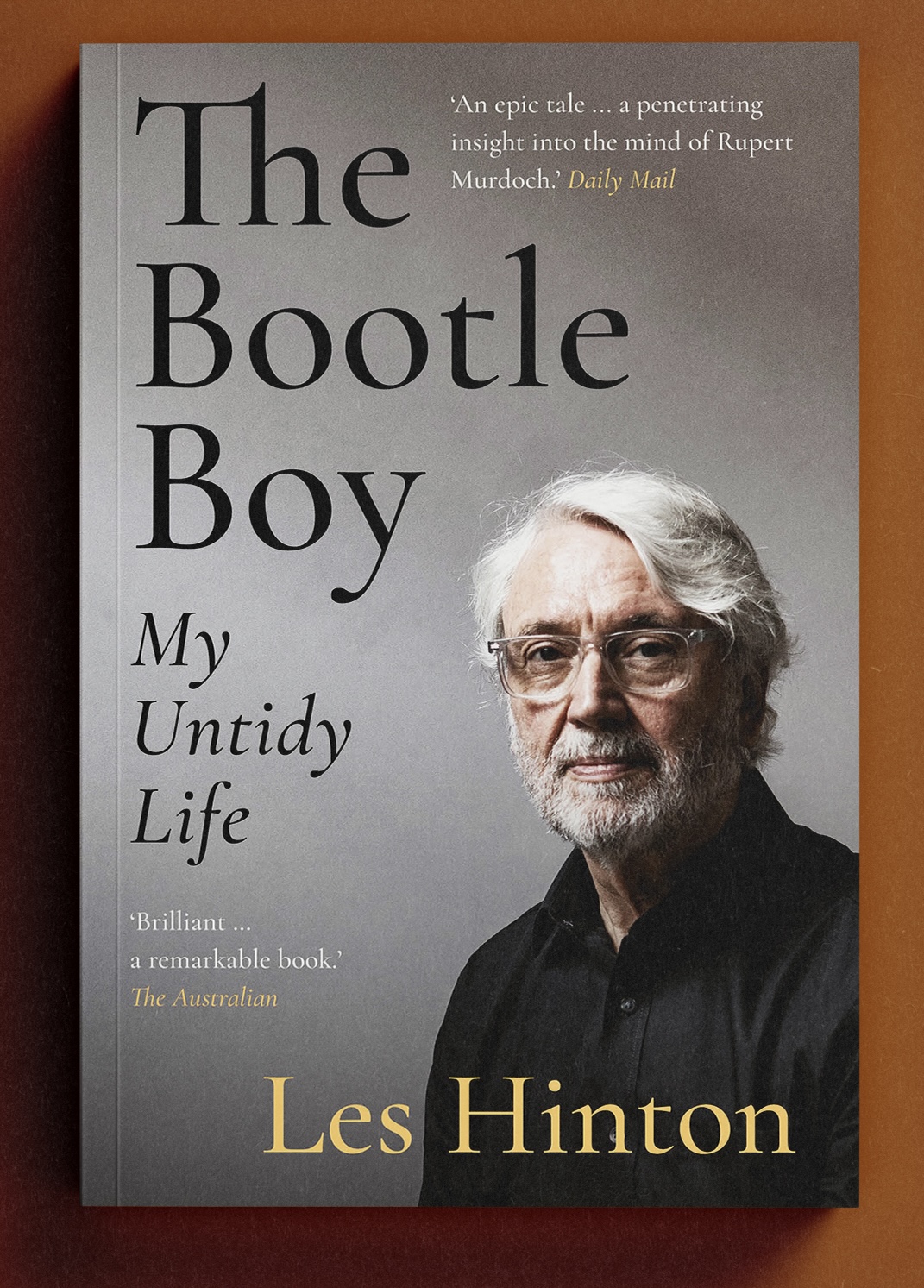
“If ever I had roots, they were here, and if a life’s foundation begins with the ground from which it emerges, then tough and blighted Bootle, and the people there who loved me, must go some way to understanding mine”  – THE BOOTLE BOY, updated 2026 edition.

“A life builds on itself, but its architecture follows no rules. It can appear at the beginning to have a strong foundation and then be swept away in the first storm, mystifying those who failed to see the flaws in its design. It can seem ramshackle, yet rebuild itself to withstand whirlwinds. My own life has surprised itself again and again. In my first15 years, we moved so many times I didn’t understand what people meant when they talked about the comfort of being ‘home’. I still don’t get it, but eventually, when I was older, I worked out my own personal definition. We lived in Egypt, Eritrea, Libya, Singapore, and the British occupied zone in West Germany – all places where, for one imperial reason or another, the British had some kind of control. They were the dying days of the Empire, and everywhere we went the sun was setting on it.

Between these postings – most of them lasting a couple of years – we existed in a limbo the army called ‘transit’, which meant spending weeks or months any place the military could make a deal to accommodate us. We stayed at seaside boarding-houses in the seedy charm of Blackpool by the promenade and near the pier in Southend-on-Sea. We lived in a green, corrugated-iron hut, insulated with asbestos, in a Liverpool suburb; and spent six months in a worn-out village hotel in the Scottish Highlands.

The rest of my life might be explained by the ingrained restlessness his childhood wandering created in me. I went to so many schools I cannot be sure of the count – in some, I was only there a couple of weeks– but they number somewhere around 13 in 10 years. I didn’t keep any childhood friends until the age of 15, when Dad left the army and we went to live in Australia. The only name I remember is Brenda Laidler in Singapore, but she hardly even noticed me.

These foreign places evaporated behind us. Everyone was a nomad, so the families we left melted away as we did, off to their own new postings and own new worlds.

The only constant place for me was Bootle, a once-prosperousLancashire hamlet, jammed hard against the docks of Liverpool, and shattered by war. If ever I had roots, they were here, and if a life’s foundation begins with the ground from which it emerges then tough and blighted Bootle, and the people there who loved me, must go some way to understanding mine. First, I found safety and happiness there; then, in a complicated way, it was terrifying; and then, almost when I wasn’t looking, the heart of my childhood was lost forever, its people gone and all its physical evidence erased.

While Bootle was a wasteland when I was born, my Auntie Gladys’s parlour was meticulous. Families lived in cramped homes but reserved their front parlours for occasions. This is where people gathered around newborns and coffins. I would sit alone in my grandmother’s parlour as a little boy. The room was cold and stale with a frayed effort at gentility. Antimacassars rested on the backs of chairs of carved wood and satin. They were laced and bright white, and no heads ever touched them. A yellowing music book was opened on the rack of an untuned upright piano. A grandfather clock stood still at 5.26. Photographs of long-dead relatives made it a shrine. Beautiful Auntie May, who died aged 20 in 1922, regarded visitors with an unwelcoming gaze. The parlour was dense with unlovely aspidistra plants. Aspidistras thrive in heat, cold, drought, bad light, and poor soil. Such an unconquerable survivor, so well adapted for hardship, must have been easy to identify with.

I was born 110 days before D-Day, so there was a lot of grief to counterbalance this happy family moment. The four-page edition of the Liverpool Echo announcing my birth carried more significant news: ‘STUTTGART Attacked in GREAT STRENGTH By Our HEAVIES’ … ‘BATTERING FOR GREAT NAZI RAIL CENTER’… ‘NAZIS FALL BACK’… ‘DEAD GERMANS IN HEAPS’. After London, Merseyside got the worst of the blitz; newspapers said bombs destroyed or damaged 90 percent of the homes in Bootle …”

Excerpts from The Bootle Boy, updated 2026 edition. Copyright © Les Hinton. Buy a copy on Amazon https://mybook.to/TheBootleBoy