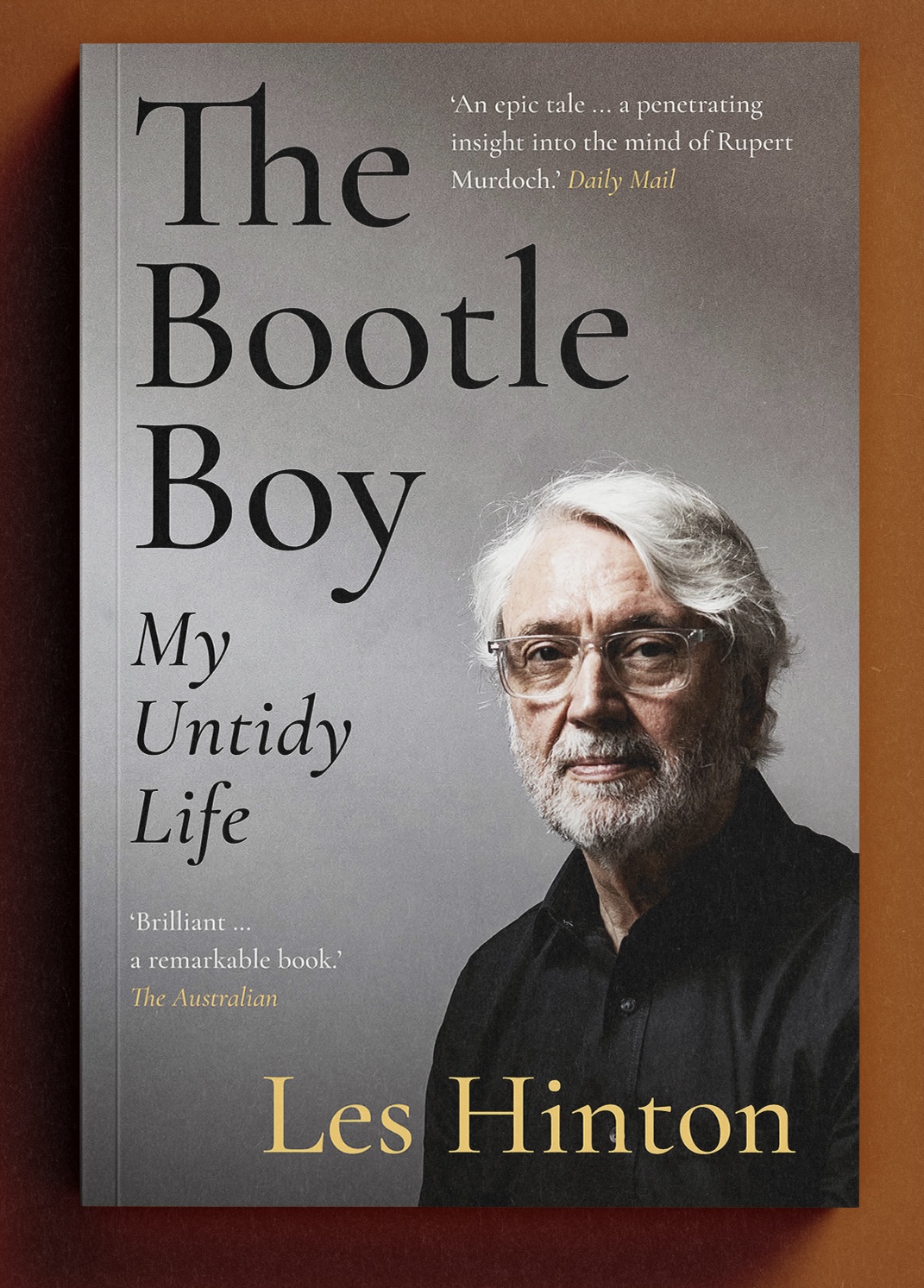
I wrote a memoir called The Bootle Boy. It tells the story of my life, and Rupert Murdoch is one of its central characters.
Murdoch has attracted admirers and fierce critics in equal measure. I worked with him for fifty years, so I had to find a way to tell my story honestly—without being accused either of biting the hand that fed me or of seeming like a brainwashed Murdoch cultist.
The result is my own account: personal, candid and, I hope, fair. Whether you admire Rupert Murdoch, dislike him, or simply want to understand the man behind the headlines, you may find something that surprises you.
As I write in my book:“He could be hands-off or autocratic, charming or irascible, forgiving or fierce, and sometimes just a comprehensive pain.”
Below are excerpts from The Bootle Boy. And you can buy a copy here https://mybook.to/TheBootleBoy
Now and then, he would seem vulnerable. We were about to close the $3 billion acquisition of the Triangle publishing group, which included TV Guide, with a weekly circulation of almost 17 million. It was the biggest publishing deal in US history and a high-stress moment.
We were waiting in a motel near Triangle’s HQ in Radnor, Pennsylvania. Lawyers and finance people were working the phones in an ill-lit conference room, organising the wiring of cash to the seller’s banks. Rupert was standing in the lobby with me and a couple of others, talking about what we would do when we walked into Triangle’s huge offices to take over the business. Here was the tough and invincible mogul on the brink of another mega deal. But then I saw a red smear on his fingers, staining the white handkerchief he had taken from the breast pocket of his jacket. He had picked at the cuticles of his fingernails until they were bleeding.
He could be in pain when things went wrong. During a company crisis, he had to sell a stable of magazines.
He organised a dinner for the departing executives, about 50 of them, and we sat in his office early that evening discussing what he would say to them. He wanted to be sure to have a grateful remark for every individual in the room. He put down his pen at last and looked silently across his office, in the direction of a wall of television screens.
‘I feel like I’ve let them all down,’ he said.
But he could also be tough and terrifying towards the people working for him.
I became good at providing therapy to executives and editors who suddenly felt out in the cold. Sophisticated people would come to me, wounded because ‘Rupert hasn’t called me for more than a month.’
My response was always the same: ‘Lucky you.’
He was like a visiting comet and the mysterious astronomy of Rupert made it impossible to know when he would appear and how long he would stay.
In meetings, he went easy on junior people; he must have seen how terrified some were. But, with senior people who displeased him, he could be savage. I consoled over drinks more than one tearful editor. He would often ask, when one more beaten executive walked limply from his office: ’Did go too far?’ Usually the answer was yes.”
Copyright © Les Hinton 2026


I’d always known this media mogul only from a distance. Now, you’ve brought him into my bedroom. Thank you.